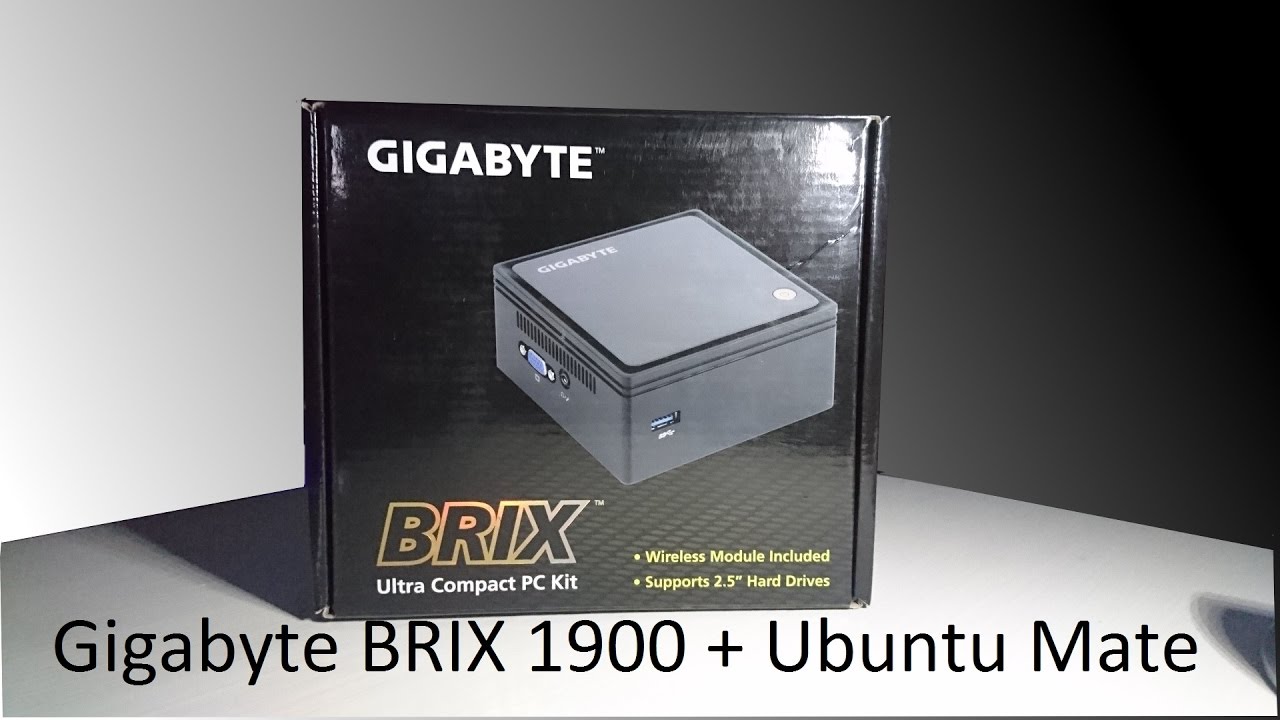
Date Di 20 September 2016 Tags / I love Mini-PC's. I recently purchased a GIGABYTE BRIX barebone to use as media station and for some skyping. Officially it is called BG-BACE-3150 and I was totally impressed by todays performance of such mini-pc's.
Mini-PC Barebone (BRIX) Download. By Model Name. Utility FAQ What is the specification of power adapter? Product Spec. GIGABYTE; About Us Career Investor CSR Press Center Newsroom Awards Social Media Videos Support FAQ.
It comes equipped with a ULV Celeron N3150 and ist a bit larger than a butter dish. For folks who had a Turbo Button on a 4x86 such a mini-pc (as well as a Raspberry Pi, of course) such mini computers are simple magic.
The Problem with Windows 7 Now that the technology has advanced so much the last couple of years, the latest computers seem to exhibit only USB 3.0 ports, not USB 2.0. That means a boot from a USB CD drive or USB stick works. But an installation from a Windows 7 CD/DVD/stick will fail. The operating system cannot handle USB 3.0 propperly. The Solution: Patch Windows to know USB 3.0 The solution is to let Windows know USB 3.0 before its very installation. This is not a hard process but can take a couple of hours (like for me) if you don't exactly know what to do.
So I thought I'll provide a short procedure such that everyone else would have a better evening than I had. Required Material Here's what you need: • a Windows 7 image, e.g., • a tool called to combine image and USB stick to a bootable Windows 7 installation medium, • a USB stick with more than 4GB memory size, • a tool to add the USB 3.0 (and further) drivers to the Windows 7 on the USB stick • for the GB-BACE-3150 it can be found • for other GIGABYTE mini-pc's please go to the product page, to 'Support and Download' and chose 'Utility' as 'Download Type'. Biblioteki dlya bazis mebeljschik 8. Officially it is called 'GIGABYTE Windows USB Installation Tool' • for even other mini-pcs please look under the available downloads (e.g. For the Intel NUC's) • a PC running Windows 7 (yeah!) Howto Patch Windows 7 to know USB 3.0 Here's how you do it: • Use rufus to install the Windows 7 image on the USB stick: launch the program and chose your image file. • On the Windows 7 PC run the 'Utility' from GIGABYTE with the Windows-7-USB-stick inserted. • Chose 'Source Path(CD-ROM)' as 'None - Add USB drivers' • Chose your 'Destination Path(USB Drive)' as the USB stick that you have just put the Windows 7 image on • Make sure to have 'Add USB drivers to an offline Windows 7 image' checked • Click on 'Start' (Note: If you do this on a Windows 10 installation it will probably never finish.) • The whole process takes in the order of an hour. If you want, check the Task Manager (CTRL-ALT-DEL, start task manager) for ongoing activities • After finish of the 'Utility' unmount the USB stick • Use the USB stick to happily install Windows 7.
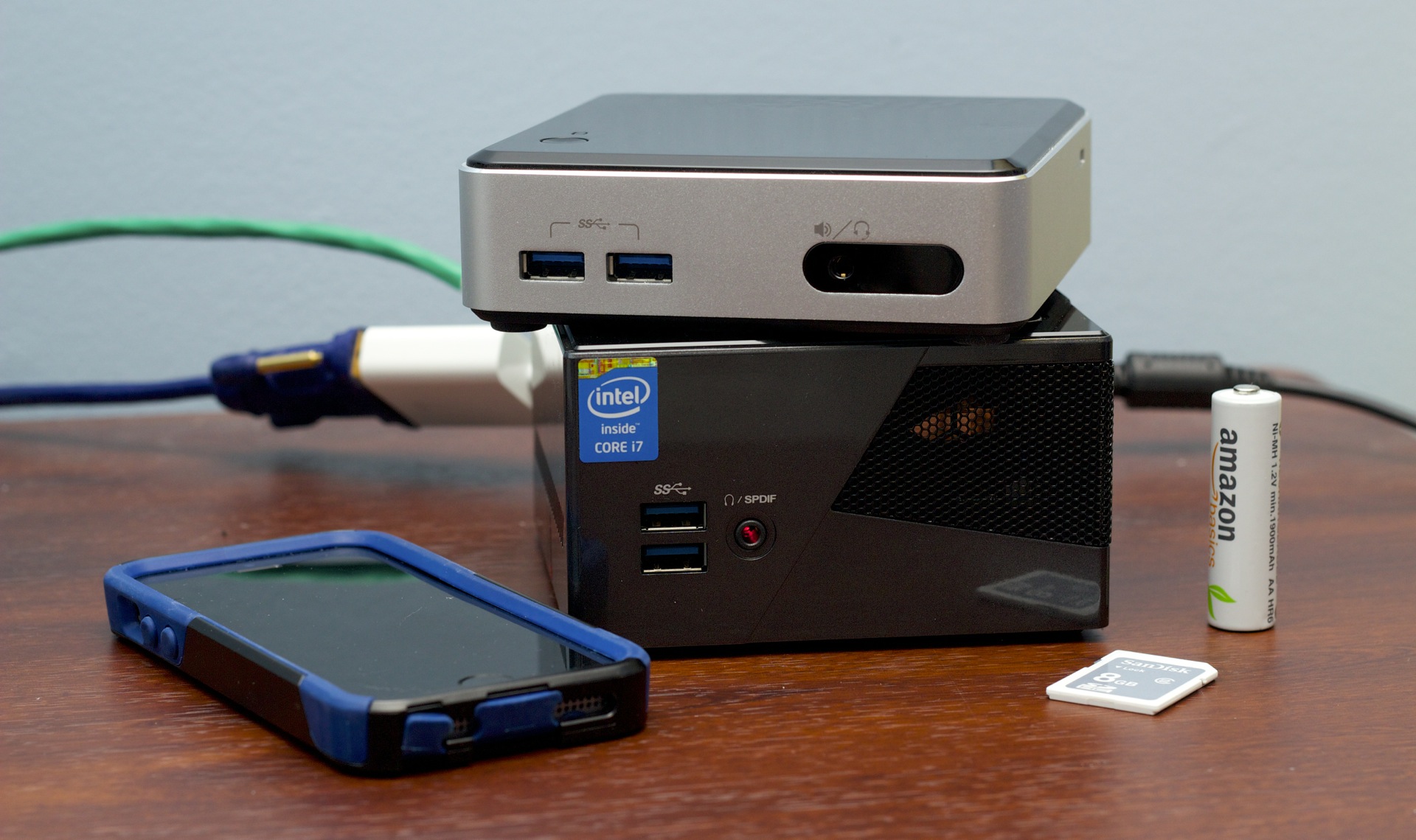
It just works. Conclusions With the help of very simple tools it is possible to install Windows 7 on the latest mini-pcs. The whole procedure takes about two hours. Note: Windows 7, GIGABYTE, and INTEL are trademarks.